
Architect José Enrique Marrero Regalado’s Enduring Legacy on Canary Islands’ Identity
Renowned architect José Enrique Marrero Regalado remains a defining figure in the Canary Islands' urban landscape, celebrated for pioneering a "Neo-Canarian" style that blended traditional local craftsmanship with modern 20th-century design.
José Enrique Marrero Regalado (1897–1956) was a central figure in shaping the urban landscape of the Canary Islands. According to recent research by Emiliano Guillén, the official chronicler of Granadilla de Abona, the Tenerife-born architect’s work defined the institutional and civic identity of the archipelago for much of the 20th century.
After graduating in 1925, Marrero Regalado’s style evolved significantly. He began his career under the influence of Madrid’s rationalist movement, collaborating on major projects like the city’s Cine Callao alongside architects such as Pascual Bravo and Gutiérrez Soto. However, after returning to Tenerife permanently in 1933, he developed his own signature "Neo-Canarian" style. This approach blended traditional local elements—such as stonework, latticework, and wooden balconies—with the modern European and American design trends of the era.
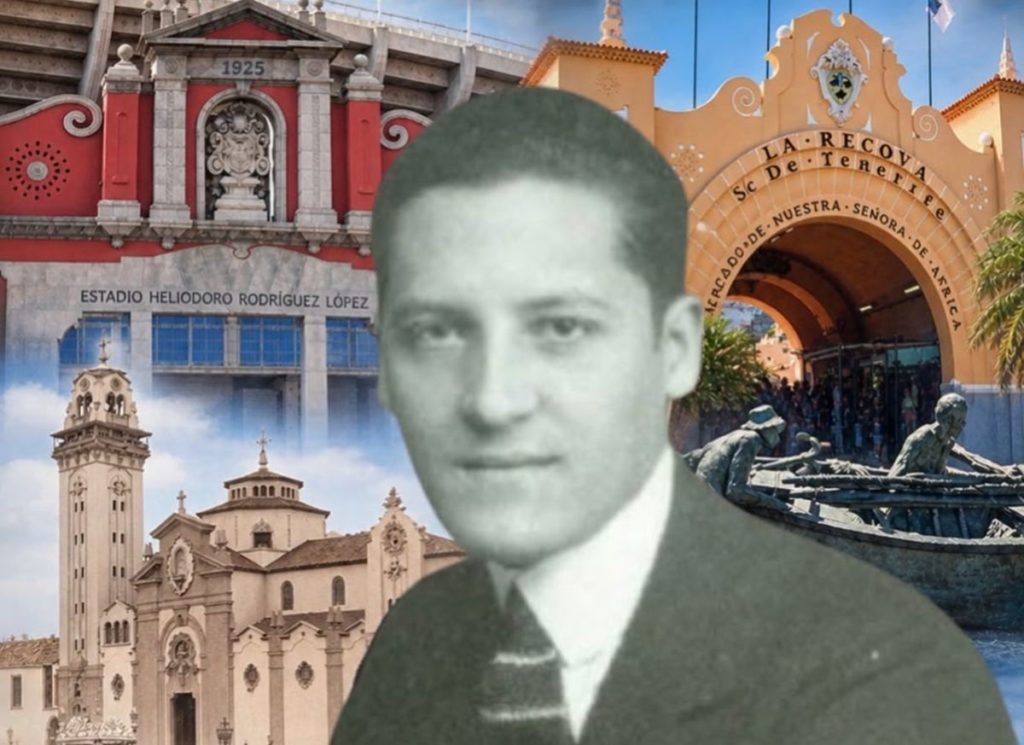
His professional legacy is defined by a wide range of work. He designed iconic public landmarks, including the Palacio Insular (seat of the Cabildo of Tenerife), the Basilica of Our Lady of Candelaria, the Heliodoro Rodríguez López stadium, and the Parador de Las Cañadas del Teide. He was also prolific in the private sector, designing notable residences in Santa Cruz de Tenerife, such as the Llombet, Larrarte, and Concepción Pedreira houses. His portfolio also included unique, large-scale projects like the ambitious but unfinished leper colony in Abades.
Marrero Regalado’s life was shaped by a bohemian youth in Madrid and a sudden change in direction following his father’s death and a family financial crisis in 1916. He eventually became the go-to architect of the postwar period. His influence even reached the world of entertainment, as he brought the technical innovations he learned in his early career to Tenerife’s cinemas, including the Víctor, the Rex, and the Baudet.
Marrero Regalado died of leukemia in 1956. Seven decades later, his work remains essential to understanding the architectural identity of the Canary Islands.