
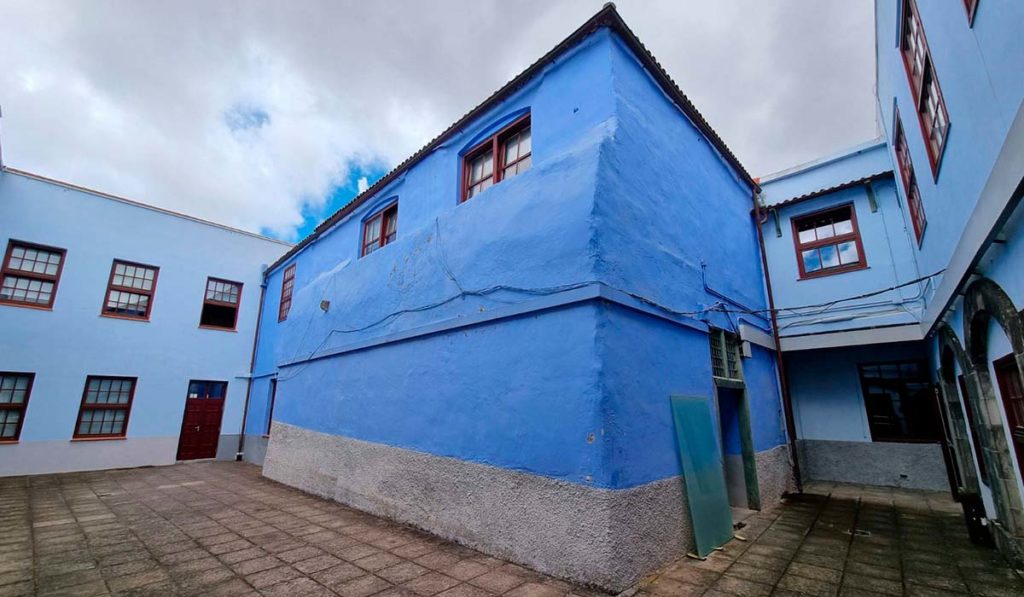
Archaeologists Search for 18th-Century Prison Beneath La Laguna’s Casa del Corregidor
Archaeologists in La Laguna have begun a two-month investigation at the Casa del Corregidor to determine if an 18th-century prison lies beneath the historic building's courtyard.
Archaeological work at the Casa del Corregidor in La Laguna has reached a critical stage, according to the city’s Department of Cultural Heritage. Over the next two months, experts aim to confirm if an ancient dungeon lies beneath the building’s interior courtyard—a theory first sparked by radar scans last year.
Coordinated by specialists Enrique J. Fernández Vega and Sergio Pou Hernández, the project seeks to uncover a structure described in municipal archives as a complex 18th-century prison. Historical records suggest the site once featured separate cells for men and women, an oratory, and a warden’s office. The team, led by the firm Serventía, Gestión Patrimonial, is now working to determine if these historical rooms are still buried underground or if the radar detected a natural geological formation.
Because the Casa del Corregidor is one of La Laguna’s oldest buildings—dating back to 1512 and surviving a major fire in 1538—the team is using non-invasive methods. By using controlled drilling and borescopes, archaeologists can inspect the underground space without risking the building's structural integrity.
This research is a vital step in the city’s plan to transform the historic site into a public museum. Adolfo Cordobés, the Councilor for Cultural Heritage, noted that this work is essential for the building’s future restoration, which includes repairing the facade and preserving a collection of historical graffiti.
Recent studies of the wall inscriptions have revealed older layers of paint and whitewash, suggesting the building has a much longer and more complex history than previously thought. The team plans to use micro-excavation techniques to uncover these hidden details, which offer a rare glimpse into the site’s past as a prison. Once these efforts are complete, the building will finally be opened to the public, ending its decades-long use as a simple administrative and storage space.