
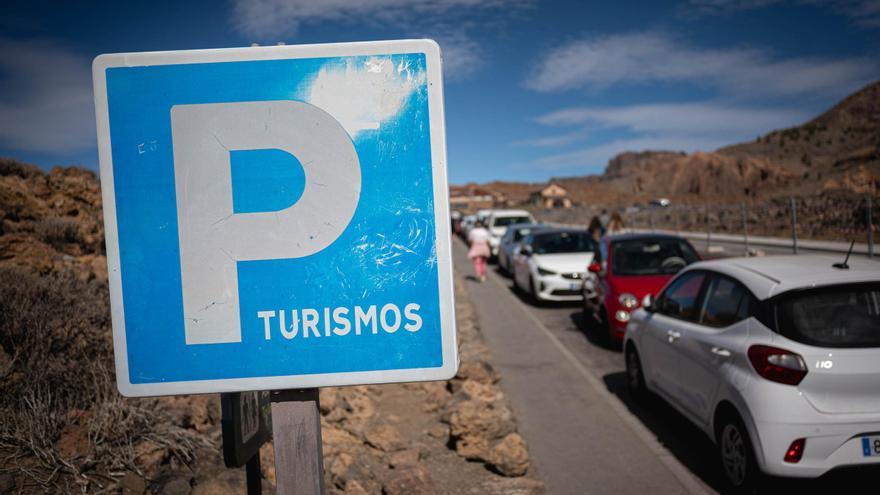
Teide could earn millions from nature conservation by introducing a fee for tourists.
The Tenerife Council is considering introducing a fee for tourists to visit Teide National Park, which could generate up to 87 million euros per year for nature protection.
Teide could receive 87 million euros per year for nature protection!
The Tenerife Island Council is considering charging tourists for visiting Teide National Park. By limiting the entry of private cars, increasing the number of buses, and introducing an environmental fee, as has been done in another park in the Canary Islands – Timanfaya – significant funds could be generated for nature conservation.
Following the example of Timanfaya Park in Lanzarote, Teide could earn approximately 86.7 million euros annually. The main difference would be that residents of Tenerife would not be charged, while in Timanfaya, locals pay a symbolic 2 euros.
Such a system already operates in other protected areas around the world. It is based on the principle of "those who use it, pay for it" and encourages tourists to be more responsible towards nature. Those who have the greatest impact on the park's ecology will contribute to its preservation.
Statistics show that the majority of Teide's visitors are tourists (86.5%), while local residents account for only 11.1%.
With this approach, Teide will resemble the Fire Mountains park in Lanzarote, where private cars are not allowed. There, people travel only by park buses, which make stops at the most interesting places.
A bus ticket costs 22 euros for a tourist and 11 euros for a child. Residents of other islands pay slightly less: 17.5 euros for an adult and 8.75 euros for a child.
If the same tariffs were applied in Teide and taking into account the number of visitors in 2024 (5.2 million), tourists would pay about 85 million euros, and residents of other islands – another 2 million.
The Tenerife Council and the Government of the Canary Islands are currently discussing how best to organize traffic in Teide Park to avoid chaos and protect it from excessive pressure.
It is worth remembering that last year the park was visited by more than 5 million people, and only a few ecologists monitor the order in the territory of 189 square kilometers.
Both administrations agree that it is necessary to limit the entry of private cars and launch more public transport, which will be paid for mainly by tourists. However, there are disagreements about how strict the restrictions should be.
The Department of Nature Protection proposes a stricter option, as in Timanfaya, where the entry of private cars is prohibited altogether. Exceptions are made only for those who work there, climbers, rescuers, scientists, and local residents on certain days.
And the Department for Presidential Affairs proposes a more flexible approach, when it will be possible to drive cars, motorcycles, and vans at certain times, and only buses at other times.
In any case, the Timanfaya model will generate significant funds that can be used not only for transport, but also for other services and nature conservation projects in Teide Park.
Thanks to this environmental fee, Teide will be able to increase funding for projects to preserve its unique nature, for which about 2 million euros are currently allocated per year.