
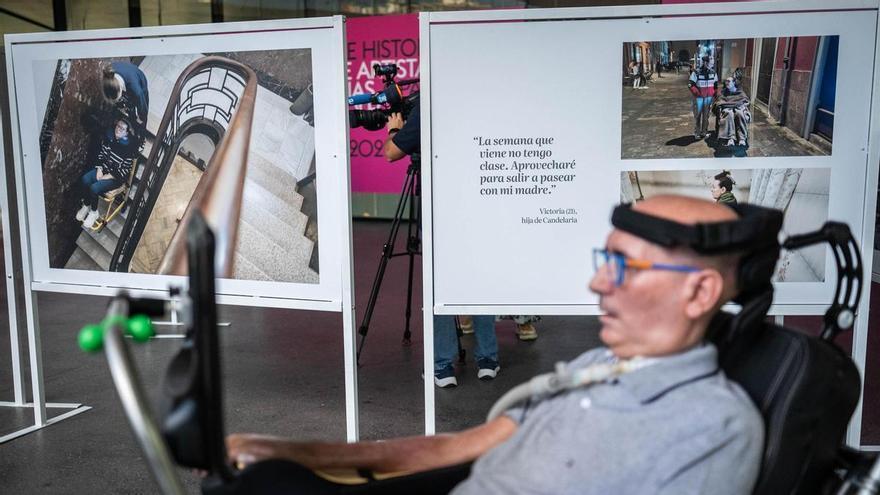
ALS Patients in Canary Islands Rely on Local Groups Amid Public Healthcare Gaps
Local organizations in Tenerife are increasingly filling critical gaps in public healthcare as families struggle with the high costs and slow implementation of national support for ALS patients.
Managing Amyotrophic Lateral Sclerosis (ALS) in Spain remains a significant challenge, with a growing divide between the needs of patients and the support provided by public institutions. Recent data from the organization Teidela regarding its "Sadela" program in Tenerife highlights this issue, showing that patient survival often depends on local groups stepping in to fill gaps in the public healthcare system. Last year, this home care service supported 44 families in Tenerife.
In the Canary Islands, there are approximately 130 ALS patients, with 70 living in Tenerife. Through a partnership with the Island Council (Cabildo), Teidela provided over 6,420 hours of specialized care in 2025. This support is vital, as the cost of living with ALS—including home modifications and specialized care—can range from 150,000 to 250,000 euros per person, an amount most families cannot cover on their own.
Patient associations have criticized the unequal access to resources, which often depends on where a patient lives. Although a national ALS Law was recently passed to provide monthly financial support of over 9,000 euros, it has been difficult to implement. According to Teidela, only about a dozen patients in the islands are currently receiving this aid. The situation is further complicated by long delays in diagnosis, which can take up to two years. This leaves family members—including students—to take on the burden of care, often spending more than 12 hours a day assisting loved ones in the advanced stages of the disease.
The Sadela program served 44 people in 2025, ranging from under 40 to over 80 years old. The service provides more than just physical therapy; it includes speech, occupational, and psychological therapy, all of which are essential for helping patients maintain their ability to communicate and eat independently.
Looking ahead, Teidela aims to make occupational therapy a permanent part of its services and improve how it delivers care. Águeda Fumero, the Island Councilor for Social Action, acknowledged that while care has improved since Teidela was founded in 2021, current support is still not enough to ensure the dignity and well-being of those living with this incurable neurodegenerative disease.