
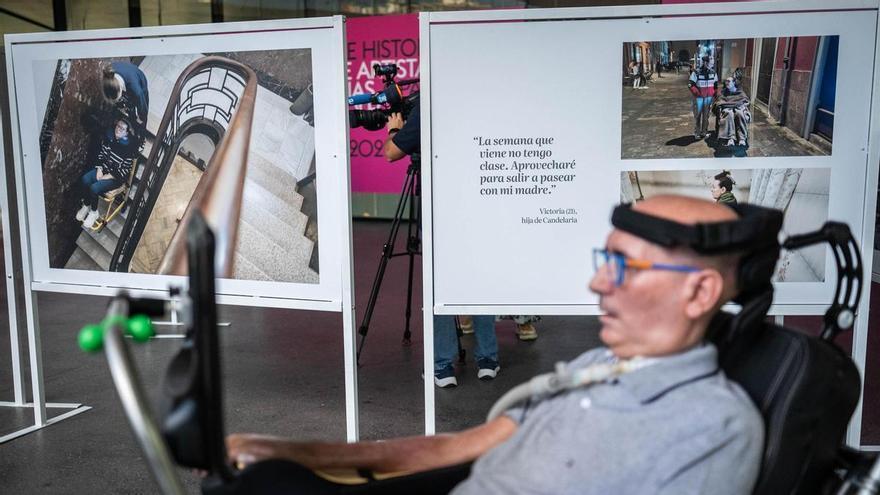
ALS Patients Face Severe Financial Hardship as Experts Call for Better Support
Experts at the "ALS in the Canary Islands" meeting highlighted that the disease imposes a severe financial burden of up to 250,000 euros per patient, underscoring an urgent need for improved social support alongside medical innovation.
Amyotrophic lateral sclerosis (ALS) is not only a major medical challenge but also a source of severe financial hardship for families. At the recent "ALS in the Canary Islands: Understanding to Advance" meeting, experts highlighted that the economic impact of this disease goes far beyond healthcare costs. Over an average life expectancy of three to five years, the financial burden can reach 250,000 euros per patient.
Dr. Helena Pérez, a neurologist at the University Hospital of the Canary Islands (HUC), notes that the average annual cost is about 50,000 euros. This figure rises sharply as the disease progresses and the patient loses independence. In the final stages, costs can double to 100,000 euros a year due to the need for specialized care, home renovations, and expensive equipment like wheelchairs or adapted vehicles. This burden is often compounded when family members must quit their jobs to provide full-time care, leading to a significant loss of household income.
While the public system offers dependency benefits—up to 9,000 euros per month for the highest level of care—experts warn that this is not enough to cover the true cost of the disease. In this environment, support groups like Teidela are essential for filling the gaps in care and protecting families from financial vulnerability.
There are an estimated 130 ALS patients in the Canary Islands. The number remains relatively stable because the rate of new diagnoses is balanced by the mortality rate, which is a unique trait of ALS compared to other neurodegenerative diseases. Currently, treatment options are limited to riluzole, a drug that only extends survival by a few months. However, there is hope in scientific research: the AP2 compound, developed by the Tenerife-based spin-off Molefy Pharma and led by CSIC researcher Ana Martínez, is currently in early safety trials. The goal is to eventually turn ALS into a manageable, chronic condition.
This situation underscores the urgent need for a better approach that combines medical innovation with stronger social support. Beyond the physical toll of the disease, there must be an institutional response to ensure that an ALS diagnosis does not lead to financial ruin for families.