
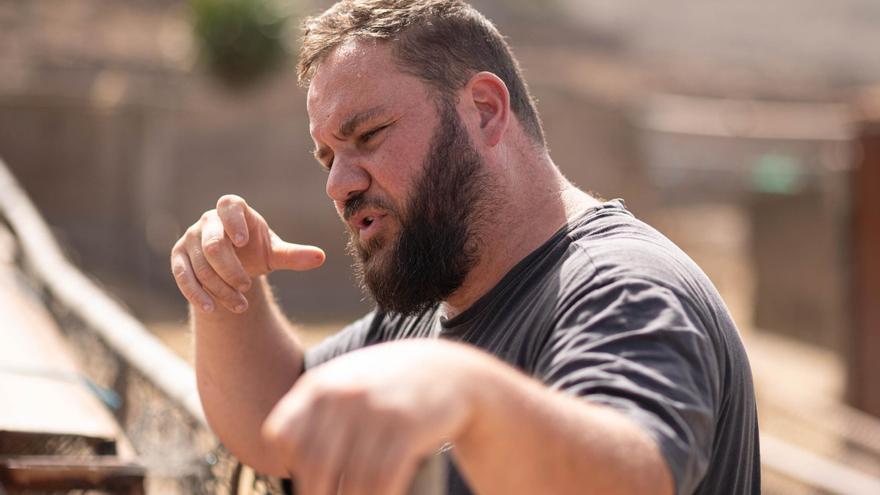
A farmer from Tenerife: "Animal husbandry in Teno Alto may disappear in 10 years."
A farmer from Tenerife, Alexander Lopez, fears for the future of local animal husbandry due to the lack of young people, complex laws, and the threat of epidemics, but sees tourism as an opportunity to support traditional cheese production.
Aleksandr Lopes is a farmer who keeps two hundred goats and a few sheep in Teno Alto, a picturesque village in Buenavista del Norte. He is called a hero or a survivor, but Aleksandr himself refuses such definitions. He says that he simply loves his job and is happy that he chose this path.
Although he loves his job, he is not very optimistic about the future of animal husbandry in Teno Alto: "I think it has about ten years left, no more. Young people don't want to do it, and that's a big problem. And sometimes the laws say one thing, but people feel something completely different," Lopes shares.
He is the owner of the Naturteno cheese factory, and his cheeses have already received many awards in Spain. Aleksandr believes that his cheese is a high-quality product and an important part of the economy of Teno Alto. "Recently, several farms have closed, but I cannot imagine our village without goats and cheese," he says.
Tourism also plays a role in the village's economy. "Yes, tourists come, but they are interested in our cheese and goats. We only have one restaurant that serves local products: cheese and goat meat," says Lopes.
The farmer decided to develop tourism on his farm as well. "I believe in quality tourism. We have everything for this. The main thing is not to spoil what we have. We don't need to do here what happened in Mask," he explains.
Aleksandr believes that tourism will help support animal husbandry. "It gets harder every year, profits are falling. Tourism can become an additional source of income," he says. He adds that when he travels himself, he looks for new experiences. "What could be better than trying something, knowing how it's made, where it came from, and why it's done here? This adds value to the product," the farmer sums up.
Aleksandr says that the inhabitants of the Canary Islands often underestimate their own products. "I don't know why, but we find it difficult to recognize the value of what we have," he says about his cheese. On the other hand, tourists from Scandinavia "look at things completely differently. They appreciate quality and know what they want."
"In the end, our product is not for everyone," Aleksandr is convinced. He decided to focus on quality, not quantity. His most famous cheese is 'Inquieto', which he ages in a cave. In 2019, this cheese received the highest award at the Agrocanarias competition.
Until 1972, it was difficult to get to Teno Alto. Then a winding road was built, which made the village special. "The road appeared only half a century ago. That's not much. That's why we have preserved animal husbandry so well. There are few places in Tenerife where livestock graze freely and sleep in the open air, as our ancestors did," says Aleksandr.
Losing this grazing method would mean the disappearance of an ancient tradition. Aleksandr sees several threats: young people do not want to engage in animal husbandry, laws complicate the work, and there is also a risk that goats may get sick. "There is currently an epidemic of blue tongue in Spain, and many livestock are dying. I think that due to the global situation, it may reach us as well. I do not rule out that something similar will happen," he says.