
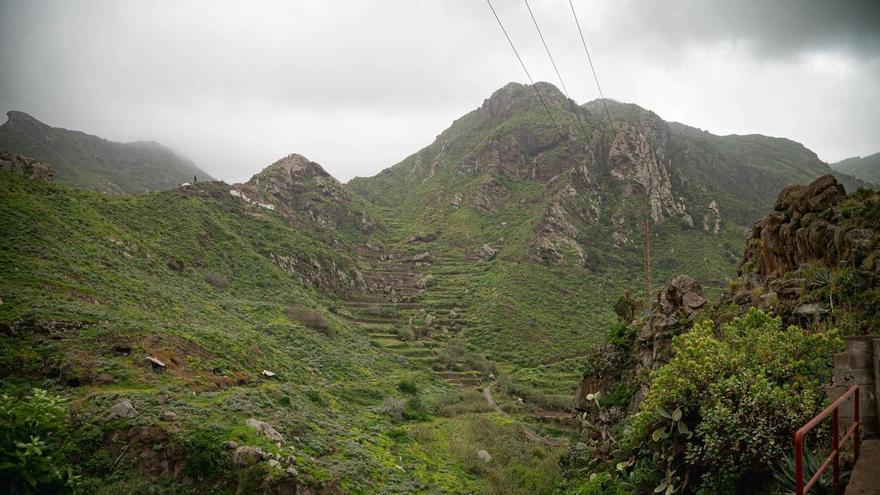
Afur: Tenerife Village Battles Rural Decline, Unmanaged Tourism
Afur, a small village in Tenerife's Anaga Mountains, faces an uncertain future due to an aging population, declining services, and the challenges of managing growing tourism amidst strict regulations.
Afur, a small village in Tenerife's Anaga Mountains, represents a struggle many rural areas face: how to keep local life alive when tourism grows and people move away. A recent report highlights that this village, home to only about fifty permanent residents, has an uncertain future. Its population is getting older, and there aren't enough basic services.
The lively spirit Afur once had has slowly disappeared. José Alonso Jiménez, nearly ninety, still runs a shop that's been open for 65 years. He remembers when the entire area, from the coast to the mountain peaks, was covered in vineyards and potato fields. This is very different from today, where farming has sharply declined. The local school, which used to have two full classrooms, shut down in 2000. This marked a turning point, showing how young families were increasingly leaving. Of Alonso Jiménez's daughters, only one still lives in Afur; the others have moved to Santa Cruz and El Médano.
Young people are forced to look for opportunities outside Afur because there are no jobs and few services. David Amador Alonso, José Alonso's nephew and head of the local residents' association 'La Cumbrecilla de Afur', describes a "strange silence" that has replaced the village's former buzz. He says the few remaining residents have grown used to it. Amador Alonso is now carrying on the work of his mother, Goya Alonso. She was instrumental in bringing about improvements like cheaper bus fares, maintained walking trails, monthly doctor visits, and a repaired church roof.
Amador Alonso criticizes how tourism is managed in Anaga. He notes that even though the Anaga Mountains are promoted at big tourism fairs like Fitur, Afur doesn't have the facilities to cope with the daily stream of visitors. There isn't enough accommodation or proper services. He also points out that there's no emergency plan for the village in case of natural disasters. He complains that authorities often "ban things instead of regulating them." For instance, roads are closed for minor landslides, and "absurd" alternative routes were put in place after part of the trail to Tamadite beach collapsed.
The strict protection rules for this central part of Santa Cruz de Tenerife are another concern for the community leader. He argues that these rules make it very difficult to build anything or even transport crops. Yet, strangely, visitor centres are allowed to be built in these same protected areas. Amador Alonso's biggest worry is that young people are leaving, making Afur a village mostly of older residents. He believes this situation is slowly killing the village, and that current policies are not only failing to stop it but are actually making it worse.
Despite these difficulties, Afur gained road access in the 1980s. This infrastructure, though late, finally connected the village to the rest of the Anaga Mountains. This link was vital for a place with a long history, dating back to before settlers arrived, and which has been abandoned at various times over the centuries. Afur's plea, heard in a place where local voices are now blended with those of tourists from around the globe, is an urgent call to prevent the emptiness and silence from erasing its unique identity and history.