
Advanced Surgery Addresses Growing Pelvic Floor Problems
Quirónsalud Tenerife, led by Dr. Guillermo Conde, is utilizing advanced, minimally invasive surgical techniques to effectively treat increasingly common pelvic floor problems, while also training specialists nationwide through its UroQxLab platform.
Pelvic floor problems, which are conditions affecting the support of organs like the bladder, uterus, or rectum, are becoming a more common reason for people to seek help at specialized clinics. When these issues significantly impact a patient's daily life and simpler treatments don't work, surgery can be an effective way to restore normal function and improve their quality of life.
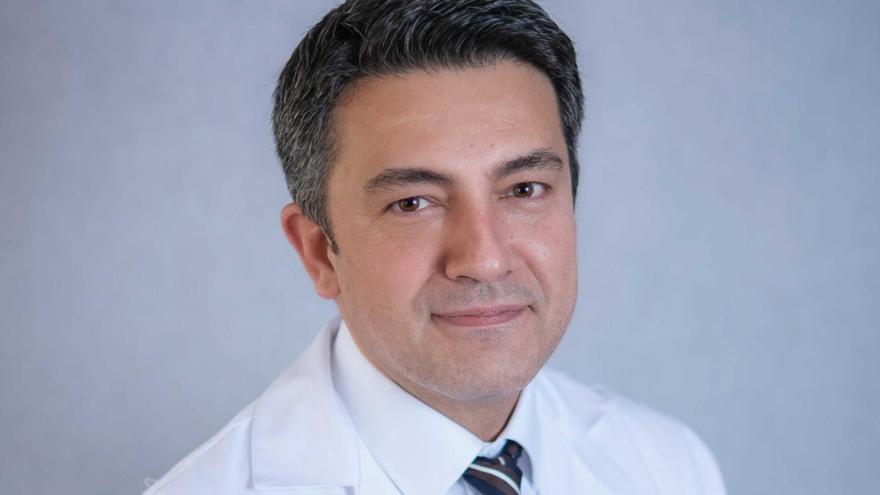
Dr. Guillermo Conde, who leads Urology Services at Quirónsalud Tenerife, Quirónsalud Costa Adeje, and Quirónsalud Vida Hospitals, explains, "Pelvic floor surgeries allow us to correct problems that many patients have silently endured for years. Today, we have very safe, minimally invasive techniques with very high success rates."
Pelvic floor surgery is mainly for people with urinary incontinence or pelvic organ prolapse. These are the two most common issues in Urogynecology. Prolapse happens when organs in the pelvis – like the bladder, uterus, or rectum – drop down. This is because the tissues and structures that support them become weak over time. Common types include bladder prolapse (cystocele), rectal prolapse (rectocele), and uterine prolapse (hysterocele). Dr. Conde notes that "for severe cases, surgery offers the best outcomes, especially when the prolapse causes symptoms like pressure in the pelvis, trouble urinating, bad constipation, or feeling a bulge in the vagina."
Stress urinary incontinence is another common reason for surgery. This is when urine leaks out by accident during activities that put pressure on the abdomen, such as coughing, laughing, or exercising. The specialist adds, "If simpler treatments like pelvic floor physiotherapy don't work, and the urethra's support structure is damaged, surgery becomes the most effective choice."
Quirónsalud hospitals in Tenerife are equipped with advanced technology and a dedicated team to treat all types of pelvic floor problems. Dr. Guillermo Conde emphasizes, "We now have very precise, minimally invasive surgical techniques that have completely changed how we treat pelvic floor issues. Patients can recover faster and with fewer complications." Depending on the patient, operations can be done through the vagina or abdomen using methods like laparoscopic or robotic surgery. These techniques mean less pain after surgery and much quicker recovery times.
For severe prolapse, a key surgery is colposacropexy, which provides long-lasting stability and excellent results. For urinary incontinence, the most common procedure is the suburethral sling. This technique effectively supports the urethra and greatly improves bladder control.
Dr. Conde also points out that "there isn't one perfect technique for everyone. The most important thing is to tailor the treatment to each individual patient. Minimally invasive surgery helps us be more precise, lower the risk of complications, and speed up recovery."
UroQxLab is a training platform run by Quirónsalud's Urology Service in Tenerife, led by Dr. Guillermo Conde Santos. It offers advanced surgical training programs. Designed as a hub for learning and professional development, UroQxLab brings together experienced surgeons and new specialists. It provides an educational setting that includes the latest scientific information, hands-on surgical practice, simulations, analysis of patient cases, and 3D technology. The goal is to establish Hospital Quirónsalud Tenerife as a leader in urological surgery through research, teaching, and sharing knowledge. UroQxLab recently hosted its first pelvic floor surgery course. This event aimed to share expertise and further train young specialists from all over Spain. Dr. Conde explained, "Treating pelvic floor conditions requires extra training beyond what Urology or Gynecology specialists typically receive. This course is designed to provide that additional high-quality, practical training."
In the Canary Islands, Quirónsalud operates three hospitals in Santa Cruz, Costa Adeje, and La Orotava. It also has six medical centers across the island, including locations in Santa Cruz de Tenerife, Candelaria, Los Cristianos, La Laguna, Icod, and Puerto de La Cruz.
Quirónsalud is Spain's top healthcare group, and with its parent company Fresenius-Helios, it's also a leader in Europe. Beyond Spain, Quirónsalud has a presence in Latin America. Overall, the group employs over 50,000 professionals across more than 180 healthcare centers, including 57 hospitals with over 8,000 beds. It uses the latest technology and has a large team of highly skilled, internationally recognized experts. Notable centers include Hospital Universitario Fundación Jiménez Díaz, Centro Médico Teknon, Ruber Internacional, Hospital Universitario Quirónsalud Madrid, Hospital Quirónsalud Barcelona, Hospital Universitari Dexeus, Policlínica Gipuzkoa, Hospital Universitari General de Catalunya, and Hospital Quirónsalud Sagrado Corazón.
The Quirónsalud Group also supports education (eleven of its hospitals are university hospitals) and medical research. It operates the FJD Health Research Institute, which is recognized by the Ministry of Science and Innovation.
Its healthcare services are structured into specialized units and networks. This approach helps share expertise across different centers and quickly apply research findings to patient care. Quirónsalud is currently involved in many research projects across Spain. Many of its centers are at the forefront of medical advancements, pioneering work in areas like oncology, cardiology, endocrinology, gynecology, and neurology.
Belén Campos Romero Territorial Content Coordinator Communications Director Phone: 616077207 belen.camposr@quironsalud.es
Rosa Ruiz Aragonés Territorial Communications Director Phone: 626 023 153 rosa.ruiz@quironsalud.es