
Adeje Unveils Diverse Cultural Program for Holy Week 2024
Adeje is celebrating Holy Week with a diverse program that blends 16th-century religious traditions, including the unveiling of a new Risen Christ statue, with contemporary cultural and educational events.
Holy Week in Adeje continues to be a vital part of the town’s identity, blending its deep historical roots with a modern approach to culture and tourism. According to the local council, this year’s program goes beyond traditional religious services to offer a well-rounded schedule that includes scientific and educational events, making it a key highlight on the island’s calendar.
The celebration is built on a religious heritage dating back to the 16th century. A major addition this year is the blessing of a new statue of the Risen Christ, created by sculptor José Antonio Cabello, which will be unveiled following the Eucharist on April 5. Due to ongoing road improvements on Avenida Constitución, the traditional procession routes have been adjusted to accommodate the changes.
Between March 21 and 26, the El Barranco History and Art Space will host a series of talks and exhibitions. Coordinated by José Gregorio González Gutiérrez, these sessions will explore the relationship between faith and science, alongside displays focusing on religious art. As part of these events, author Christian Gálvez will serve as the town crier and present his latest book at the Church of Santa Úrsula.
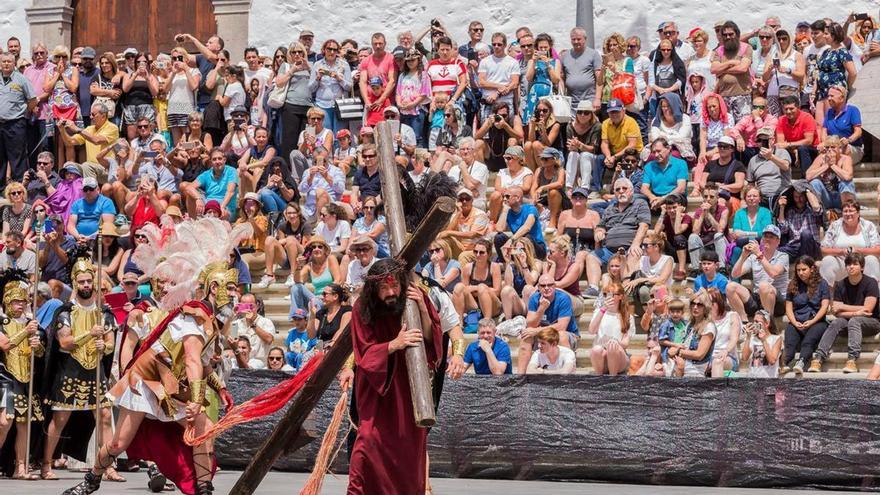
Mayor José Miguel Rodríguez Fraga notes that these events are essential for bringing the community together. The centerpiece of the week remains "The Passion of Adeje" on April 3, a performance that has gained significant popularity through its television and online broadcasts.
The program showcases a diverse collection of religious art, ranging from 18th-century Flemish and American pieces to contemporary works by artists like Juan Ventura, Ezequiel de León, and Francisco Romero Zafra. By combining these historical treasures with modern cultural activities, Adeje is successfully keeping a tradition that dates back to 1561 alive for a contemporary audience.