
Adeje Council Seeks Expanded Protection for La Caleta-Diego Hernández Coastal Site
Adeje City Council has formally requested that the Canary Islands Government expand the protected status of the La Caleta-Diego Hernández site to mitigate environmental damage from urban growth and tourism.
Adeje City Council has taken a significant step toward better protecting the La Caleta-Diego Hernández Site of Scientific Interest, signaling a shift in how Tenerife’s coastline is managed. With majority support—and only an abstention from Vox—the council is urging the Canary Islands Government and the Tenerife Island Council to expand the protected area, which currently covers 78.3 hectares.
This move comes as concerns grow over the area’s ecological health. Despite its status as an environmentally sensitive zone, the site is under pressure from urban growth and tourism in the south of the island. Rather than relying on occasional clean-ups or patrols, the council is proposing a long-term strategy to incorporate nearby land—even degraded areas—to restore the landscape and prevent the protected site from becoming isolated.
Using Law 4/2017, the council is calling for a "peripheral protection zone." This would act as a buffer to reduce outside impacts and help local wildlife thrive. The measure is considered urgent because the area’s fragile ecosystems—including seabirds, native flora, and unique shrublands—are at risk of being damaged if the site is treated simply as an urban beach.
Adeje officials argue that recent efforts by the Island Council to remove waste and repair trails are not enough to counter the scale of the threats. They are now calling for regular environmental studies to track biodiversity and geological health, ensuring that future decisions are based on solid data rather than reactive fixes.
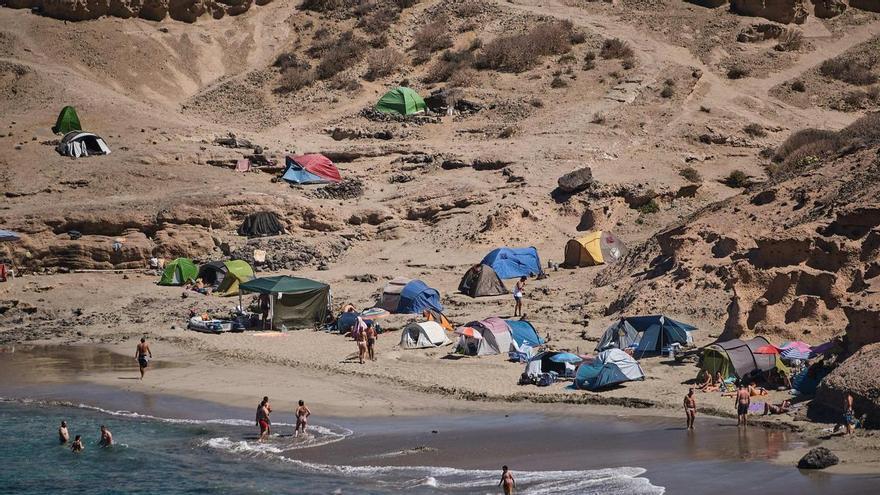
Ultimately, the council wants to change how Diego Hernández is viewed, moving away from its use as a recreational area. Recent issues, such as illegal camping and unauthorized events, have highlighted how vulnerable the site is. It is now up to the regional and island governments to decide whether to prioritize the preservation of this coastline over the urban development that has shaped southern Tenerife for decades.