
Abandoned Canary Islands Developments Spark Calls for Urgent Demolition and Reform
Abandoned construction projects across the Canary Islands have sparked renewed calls for government intervention to address the safety hazards, environmental degradation, and urban planning failures caused by these long-standing structural ruins.
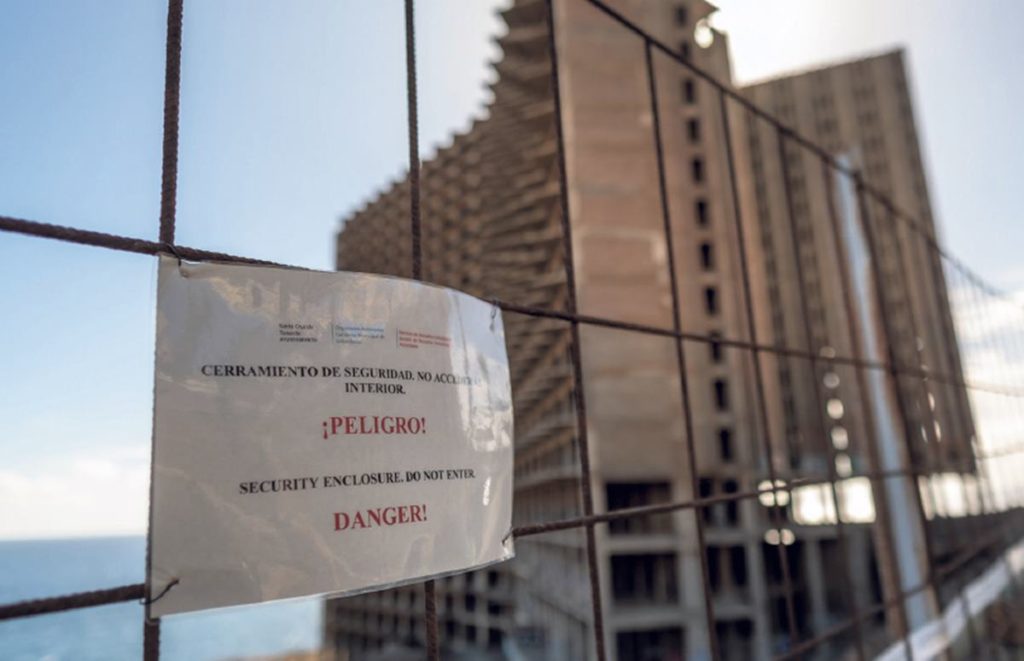
Unfinished buildings scattered along the Canary Islands' coastline have returned to the spotlight, once again highlighting the failures of past urban planning. These structures, originally intended for homes or tourism decades ago, now sit abandoned. Beyond being an eyesore, they have become serious safety hazards and a major land-use challenge.
Sites like the Añaza block and the Puntillo del Sol skeleton in La Matanza de Acentejo are prime examples of this issue. Their abandonment is the result of a mix of financial crises, legal battles over inheritance, and the bankruptcy of original developers. This administrative deadlock has left these buildings in a legal limbo; left to decay, they have become dangerous shelters for vulnerable people.
Environmental groups, such as the Tenerife Association of Friends of Nature (ATAN), argue that these ruins are the legacy of a development model driven by reckless real estate speculation—a strategy that prioritized building over long-term sustainability. Critics are calling for public institutions to stop stalling and take decisive action. The Telesforo Bravo-Juan Coello Foundation notes that current laws already give authorities the power to demolish these structures and bill the owners for the costs, a step they believe is necessary to protect the public interest and restore the landscape.
The Canarina Foundation suggests a two-part solution based on the location and condition of each site. For buildings in urban areas, they propose that the government acquire them or transfer them to cooperatives to create social housing. For structures in natural areas or those that are too damaged to save, they advocate for immediate demolition and the restoration of the land.
The situation underscores the urgent need for clear deadlines. As long as these buildings remain, they not only scar the landscape but also create a sense of decay that developers often use to justify further construction. It is a vicious cycle that local authorities have yet to break.