
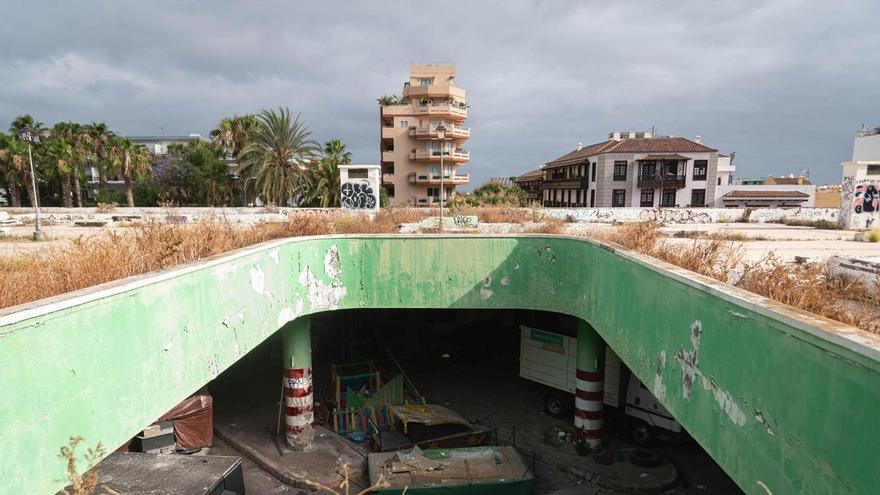
Abandoned Bus Stations Leave Northern Tenerife Facing Urban Decay
Abandoned bus stations in Tacoronte and Puerto de la Cruz have become symbols of administrative neglect in northern Tenerife, with one site facing continued delays while the other prepares for a long-awaited redevelopment.
Urban planning in northern Tenerife is struggling with a series of outdated, abandoned structures that have become eyesores and sources of public concern. Recent reports highlight the former bus stations in Tacoronte and Puerto de la Cruz as prime examples of how administrative delays and broken promises have left key areas in a state of neglect.
In Tacoronte, the bus terminal near the TF-5 highway remains paralyzed. Although the local council approved plans in 2022 to demolish the site and replace it with 74 parking spaces and improved pedestrian access, the project has stalled. The site is currently unsafe for bus operations, forcing passengers to use basic shelters instead. This follows a long history of failed proposals, including a 2007 plan for a seven-story building that was never built. Today, the local government has provided no clear timeline for improvements, leaving residents to deal with an area they describe as unsafe and neglected.
About 20 kilometers away, Puerto de la Cruz is finally seeing a path forward after more than a decade of waiting. The bus station on Calle Melchor Luz was closed in 2009 due to structural issues, such as aluminosis. While a new transport hub opened in 2019, the old site has remained empty. Officials now plan to begin the complex, 5.5-million-euro demolition process in June 2026. The goal is to transform the 15,000-square-meter property into a multifunctional space featuring an auditorium, shops, and 900 parking spots, with construction slated to start before 2027.
These "urban ruins" are more than just a waste of space; they create security risks and highlight a broader failure in how public spaces are managed across the Canary Islands. While Puerto de la Cruz appears to be nearing the end of a 17-year cycle of inactivity, the lack of political action in Tacoronte continues to leave the community with an unsustainable, decaying site. In both cases, the disconnect between the public’s needs and the government's ability to deliver results has turned these locations into symbols of administrative failure.