
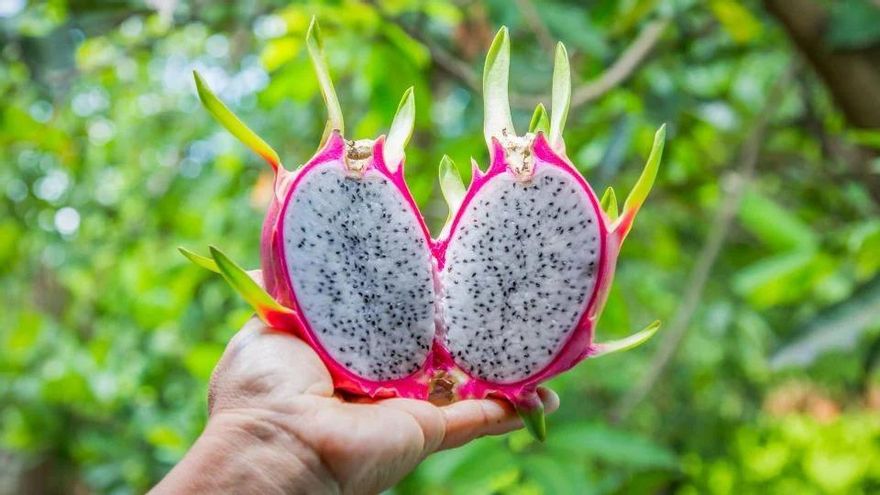
Tenerife plans large-scale pitaya cultivation with EU support
Tenerife plans to increase pitaya production through the joint Pitamed project, aimed at improving the efficiency and sustainability of growing this exotic fruit.
In Tenerife, they want to grow more pitaya! The local authorities (the Council for the Primary Sector and Animal Welfare of the Cabildo of Tenerife) have agreed with the Canarian Institute of Agricultural Research (ICIA) on a joint project called Pitamed. The goal is to help farmers grow pitaya (an exotic fruit native to America) more efficiently and sustainably.
Lope Afonso, Vice President of the Cabildo, says that this will make Tenerife one of the leaders in growing new, profitable crops such as pitaya. The demand for this fruit is growing both in Spain and abroad. He also added that this is an important project, funded by the government and managed by experts from Tenerife and the Canary Islands.
Valentín González, Councilor for the Primary Sector and Animal Welfare, explained that the Pitamed project has received support from the Spanish Agricultural Guarantee Fund (FEGA) and the European Innovation Association (AEI-Agri).
The Cabildo of Tenerife, together with ICIA, ANECOOP, Coagrisan (from Gran Canaria), the University of Almería, and other organizations, will work on the project. 43,120 euros have been allocated from the island's budget for 2025 for this purpose. This money will be transferred to ICIA.
Afonso and González said that the Pitamed project plans to study different varieties of pitaya, methods of growing it (in greenhouses and outdoors), irrigation and fertilization needs, and methods of pest control. In addition, they will improve artificial pollination, methods of storing fruits after harvest, and develop technologies for the production of ready-to-eat sliced pitaya. All this information is promised to be disseminated among farmers and other interested parties.
The project will run from September 2025 to January 2027, but it may be extended. A special commission will be created to monitor the implementation of the project, which will include representatives from ICIA and the Cabildo.