
15 Inmates Arrested for Drug Smuggling at Tenerife II Prison
Since the beginning of 2025, authorities at Tenerife II Penitentiary Center have intercepted fifteen inmates attempting to smuggle various drugs, often using dangerous "body packing" methods, into the prison.
Bringing drugs into prisons in Tenerife, often using dangerous methods, continues to be a major challenge. This has led to a series of important actions. According to the Civil Guard, officers, working with prison staff, have caught fifteen inmates trying to smuggle drugs into Tenerife II Penitentiary Center, the island's main prison.
These operations highlight the constant need to be vigilant against techniques like "body packing." This dangerous method involves hiding drugs inside body cavities. If the internal packages break, it can cause severe poisoning or even death for the person carrying them, depending on the substance and amount.
Security measures are put in place jointly by the Penitentiary Center's Security Section and the Civil Guard, especially when inmates return from temporary leave or after in-person visits. If there's a suspicion that an inmate might be carrying drugs, an initial search is conducted using drug detection dogs, followed by a physical search. If the inmate doesn't cooperate or doubts remain, officers can take them to a medical center for X-ray examinations to locate any hidden foreign objects.
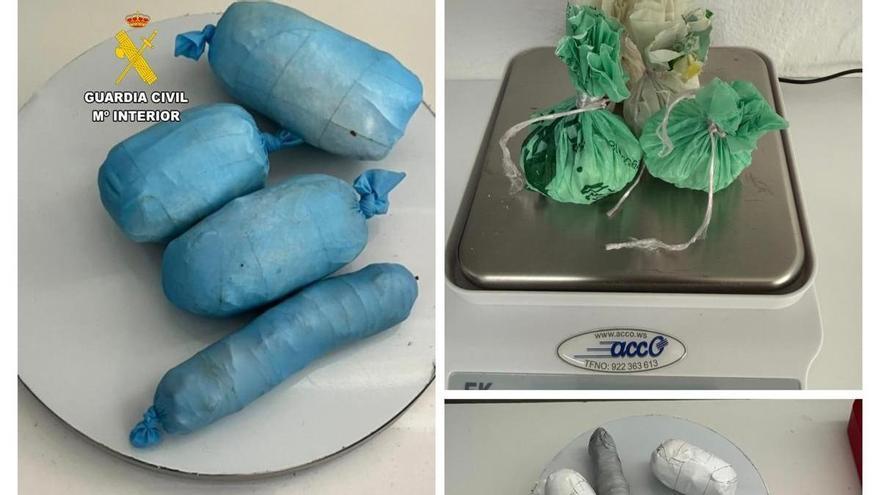
Since the beginning of 2025, fifteen successful operations have taken place, uncovering various drugs like heroin, crack, cocaine, and anabolic pills. In one significant incident, 100 grams of crack were discovered in multiple packages hidden inside an inmate. The most recent intervention, carried out last February, resulted in the seizure of over 90 grams of hashish and 97 anabolic pills from another inmate.
The cases opened, along with the seized drugs, are forwarded to the relevant Penitentiary Surveillance Court. It's important to note that, under Article 368 of the current Penal Code, those involved in drug trafficking offenses that cause serious harm to health, such as with heroin, crack, or cocaine, can face prison sentences of three to six years. Furthermore, the Supreme Court's rulings allow for these penalties to be increased if it's proven that the drug was intended for distribution among several inmates or for sale within the center, or if visitors were involved in the crime.